Marian Road,
Acton, MA
Site #1
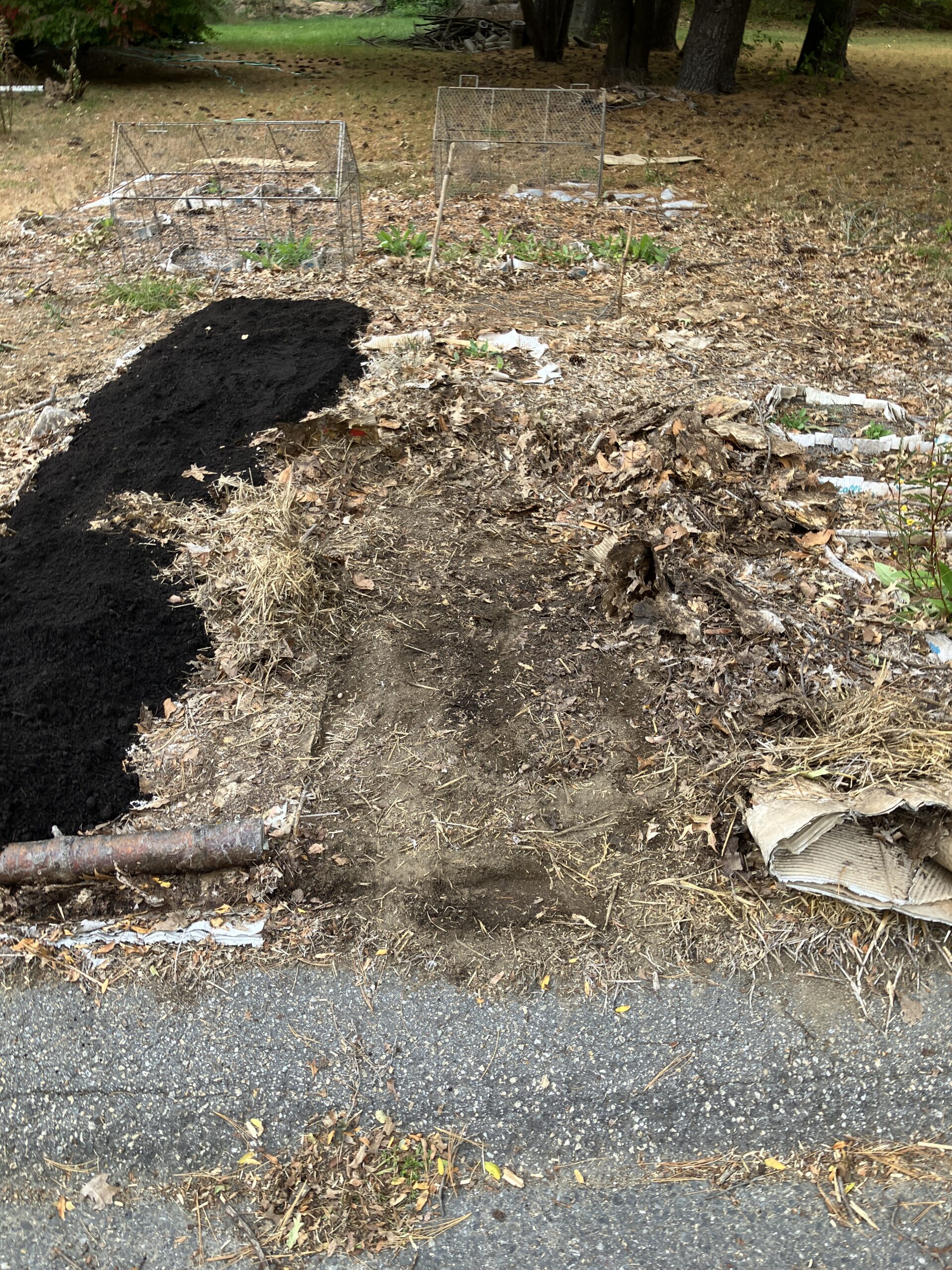
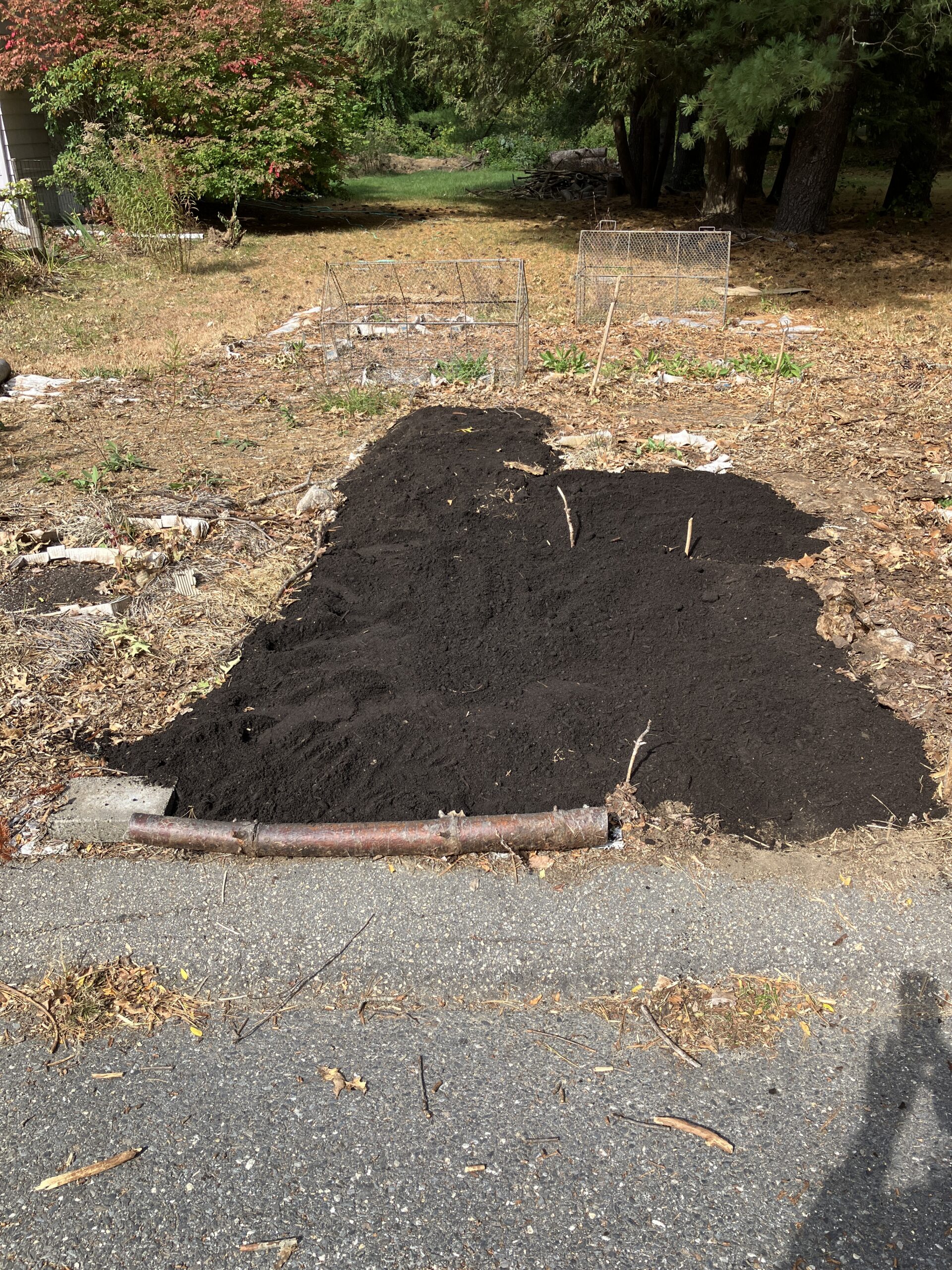
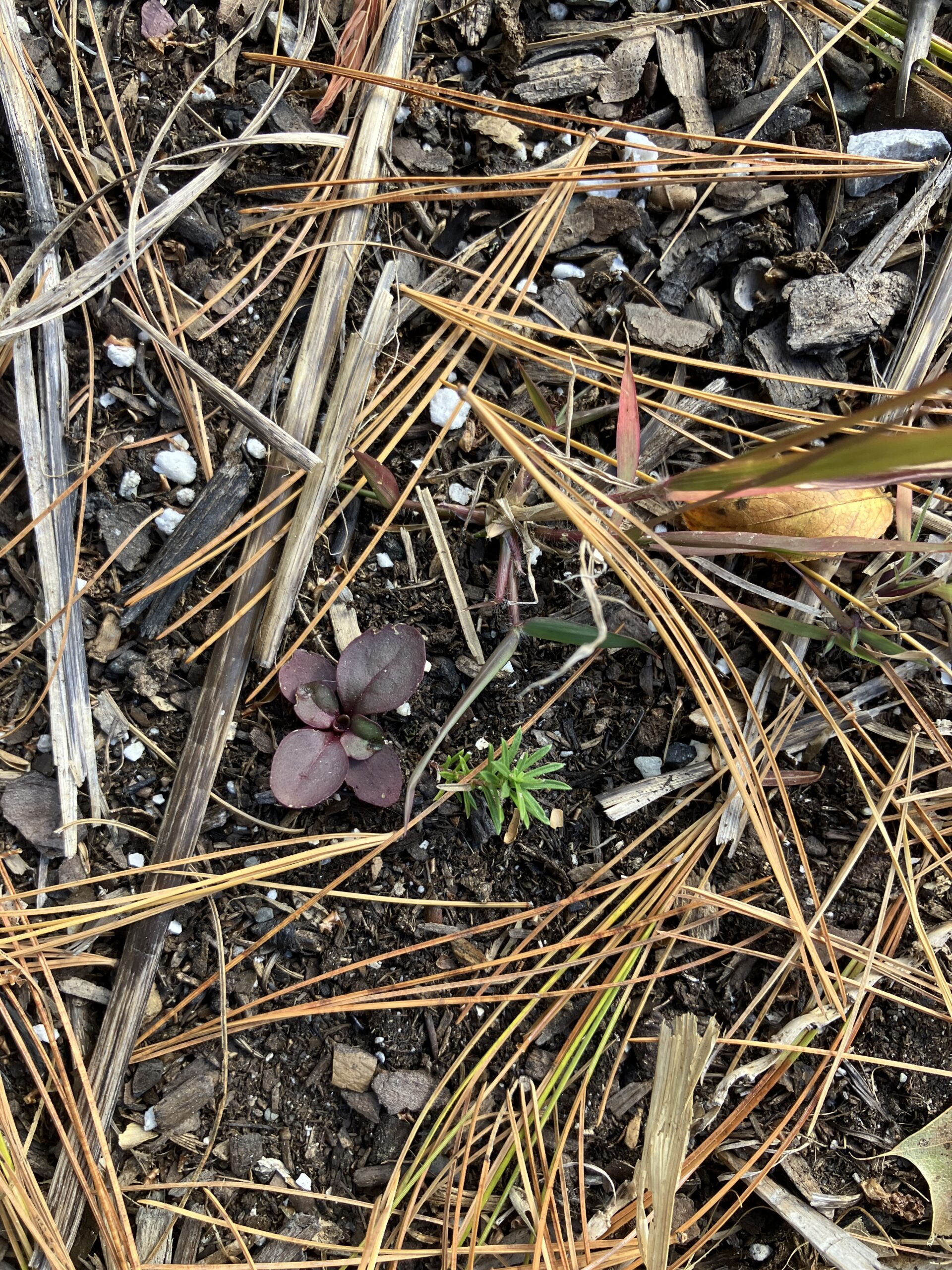
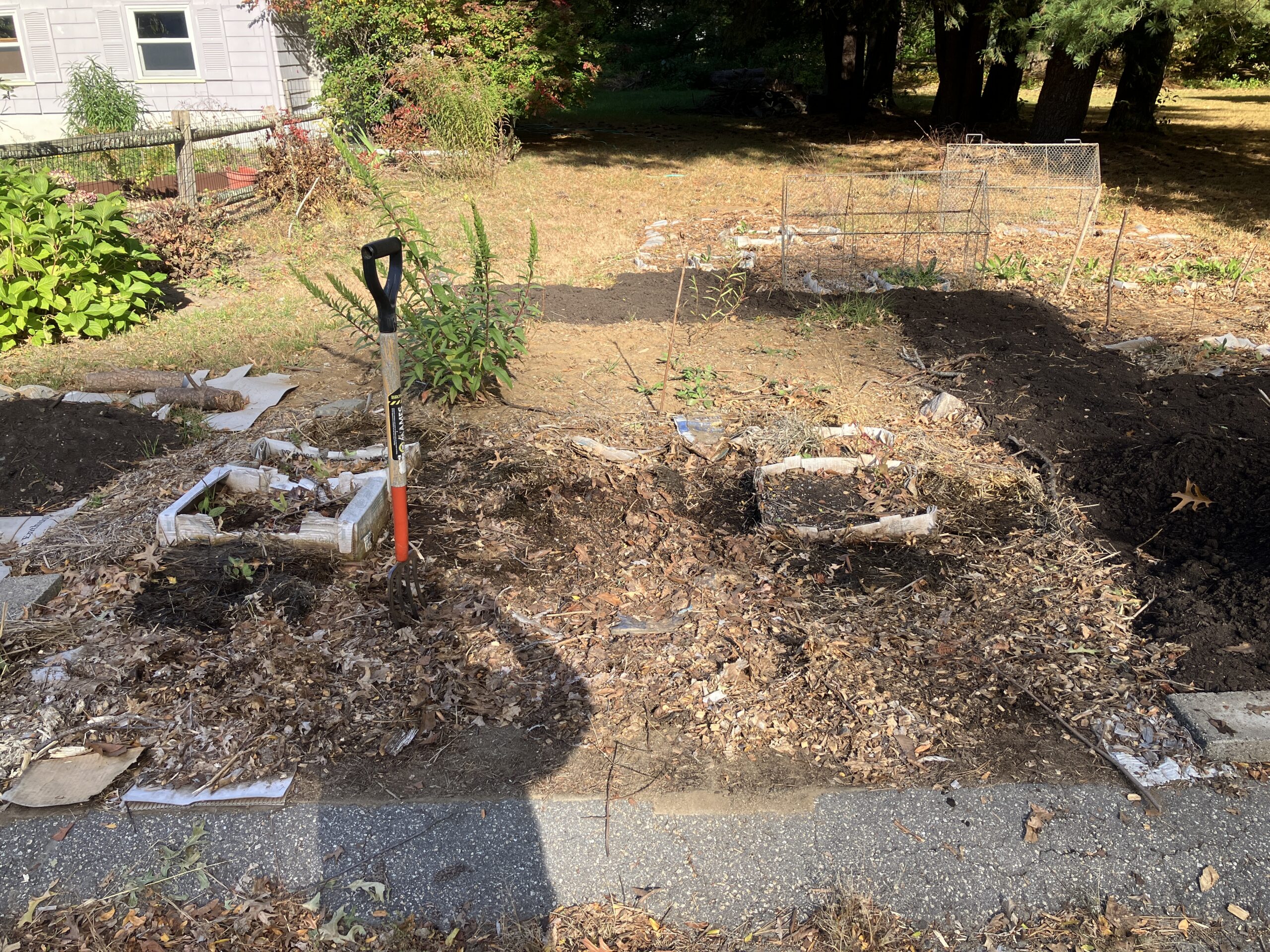
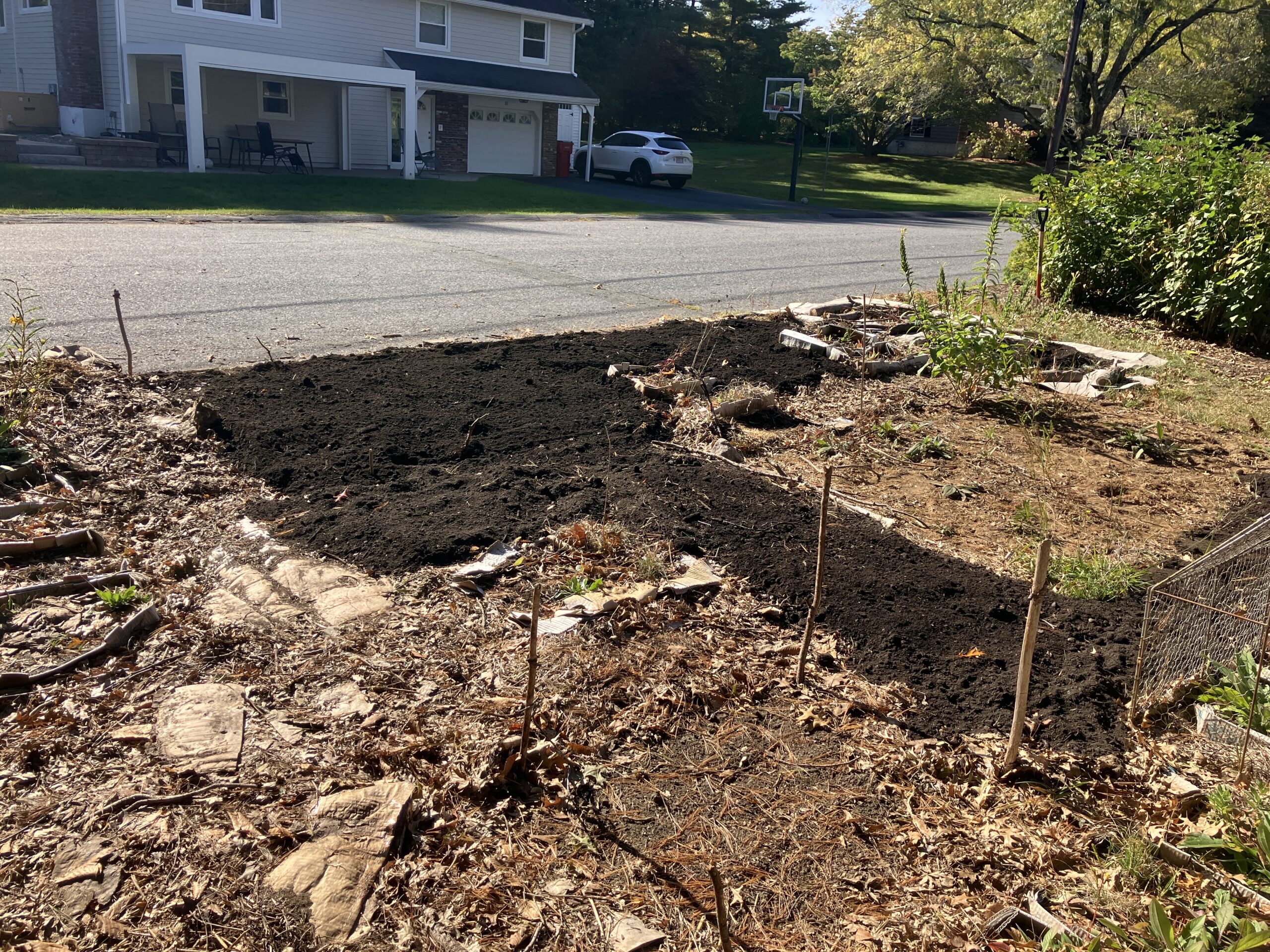
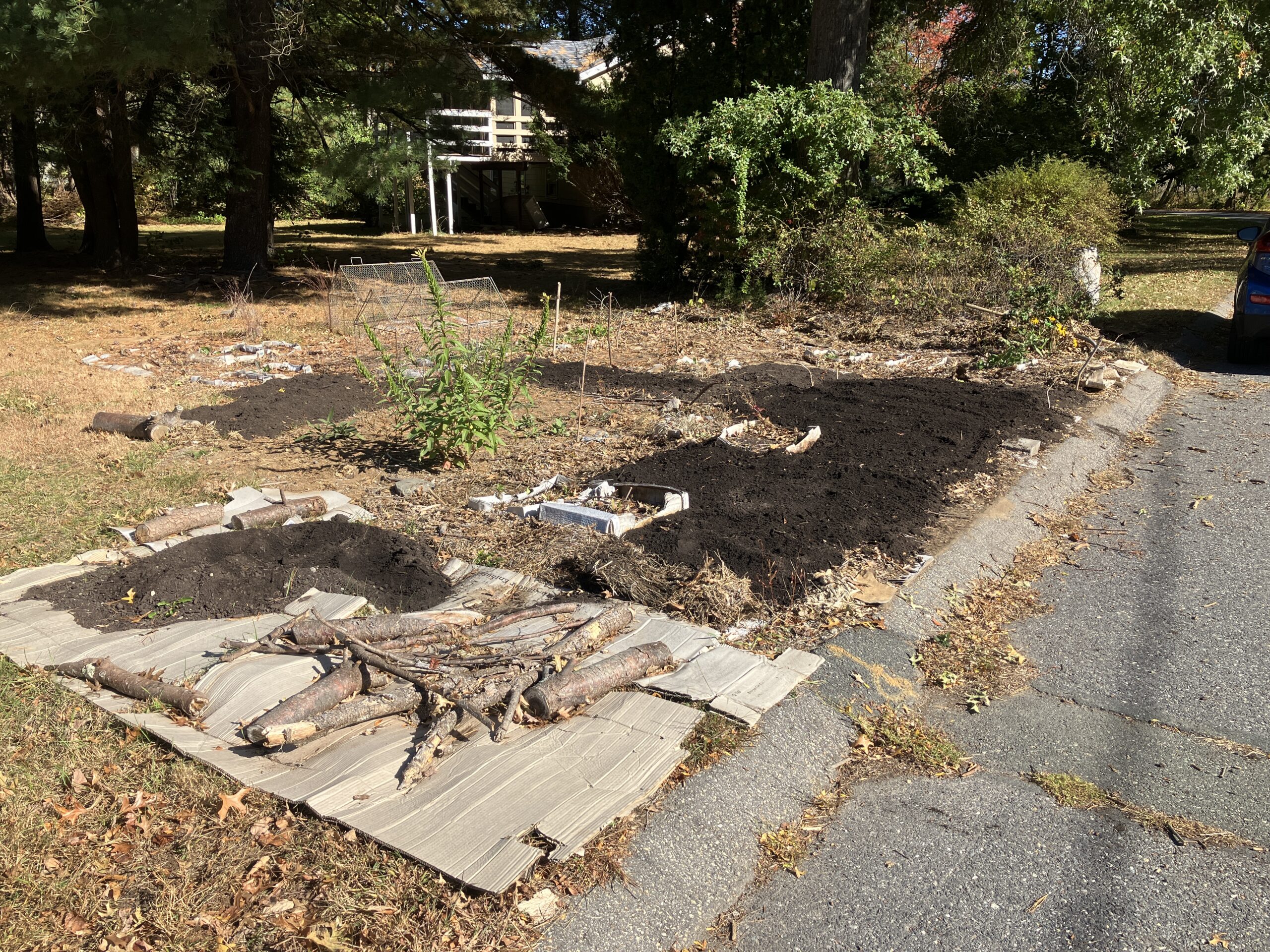
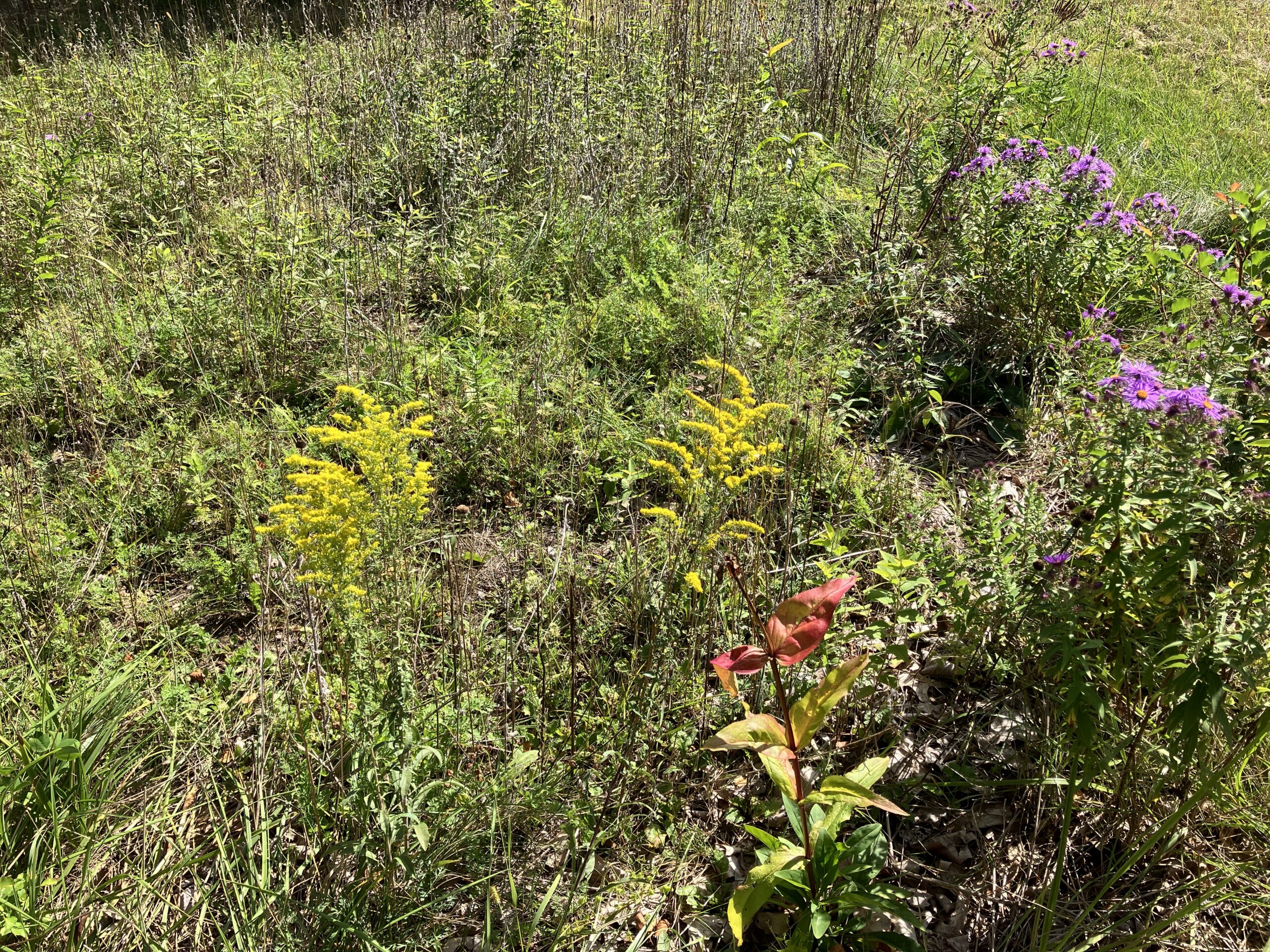
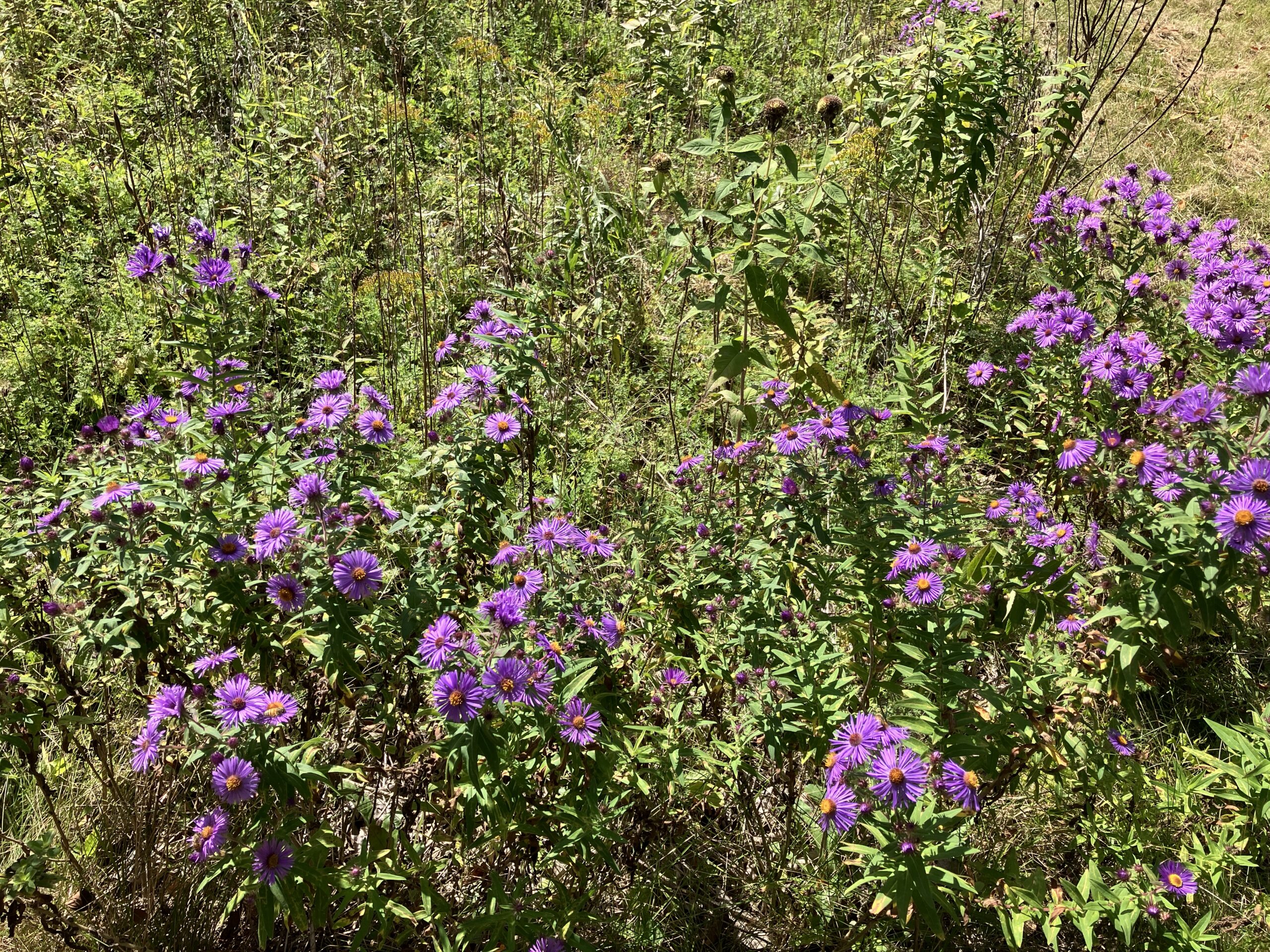
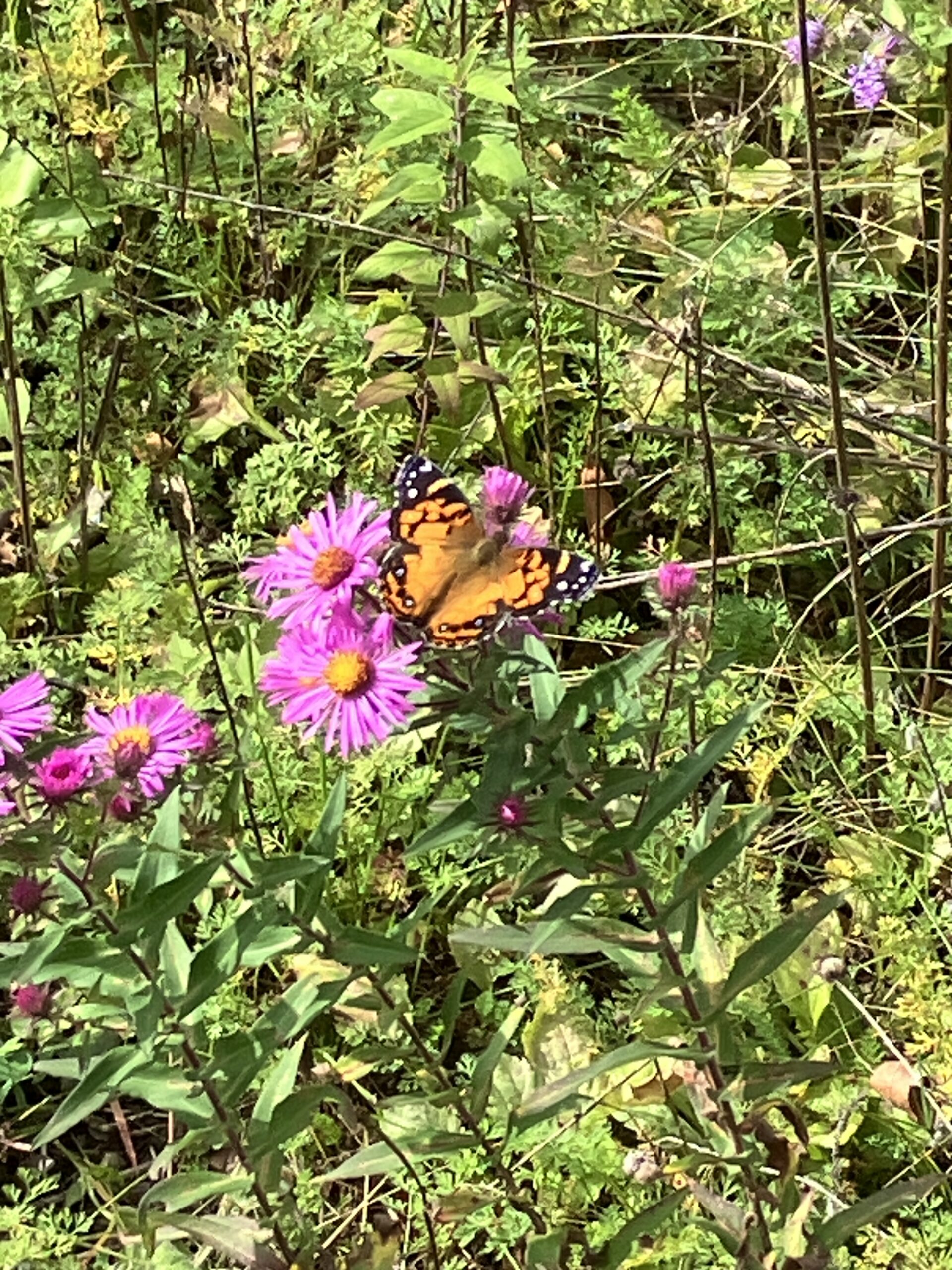
A resident of Acton donated a 17’ by 20’ area of his garden to my experiment. On November 30, 2023, I rented a sod cutter and removed the turf. I turned it several times, which was a mistake. The plot has never flourished while the plants around it are much larger and healthier. In February, 2024, I seeded the plot. Spring 2024, I had a weedy mess, although it’s also true that three of the 1000s of seeds I laid down germinated (you can see the two of the Verbena hastata (blue vervain) from that seeding as large plants in the latest images). Throughout the summer, I cleared weeds an allowed the few native plants that germinated or blew in from surrounding weeds (Rudbeckia hirta, black-eyed Susan and Achillea millefolium, yarrow) to grow. On November 18, 2024 I reseeded. Spring 2025, many seedlings emerged from the second seeding, but I’ve also seen Phlox pilosa (downy phlox) and Geranium maculatum (wild geranium) from 2024. I continued to hand weed to get rid of Daucus carota (Queen Anne’s lace, Phytolacca americana (pokeweed; native, but too large for the area), fleabane, and horseweed. Summer 2026, the site is dominated by unwanted natives (Erigeron annuus) and non-natives, but the native perennials are doing better. Monarda fistulosa has finally bloomed. I recently noticed a Pycnanthemum muticum blooming. A couple of Penstemon that I planted there bloomed.
Marian Road: November 2023 to 2026
I cut the sod off in November, 2023 and seeded it in February, 2024. Throughout summer 2024, I cleared weeds and allowed 2 verbena and many Rudbeckia hirta to flourish. I planted a Asclepias purpurascens, which promptly got eaten. I reseeded Nov. 18th, 2024. The plants were relatively small and weedy summer 2025. Summer 2026, the area is looking much more like a field but only because undesirable meadow-like species are dominating. I still have New England aster, Rudbeckia hirta, Verbena hastata, and Monarda. Fall 2026, the field is looking better. The plants continue to be diminutive relative to the undisturbed areas.
Click on image to view larger


School Street,
Acton, MA
Site #2
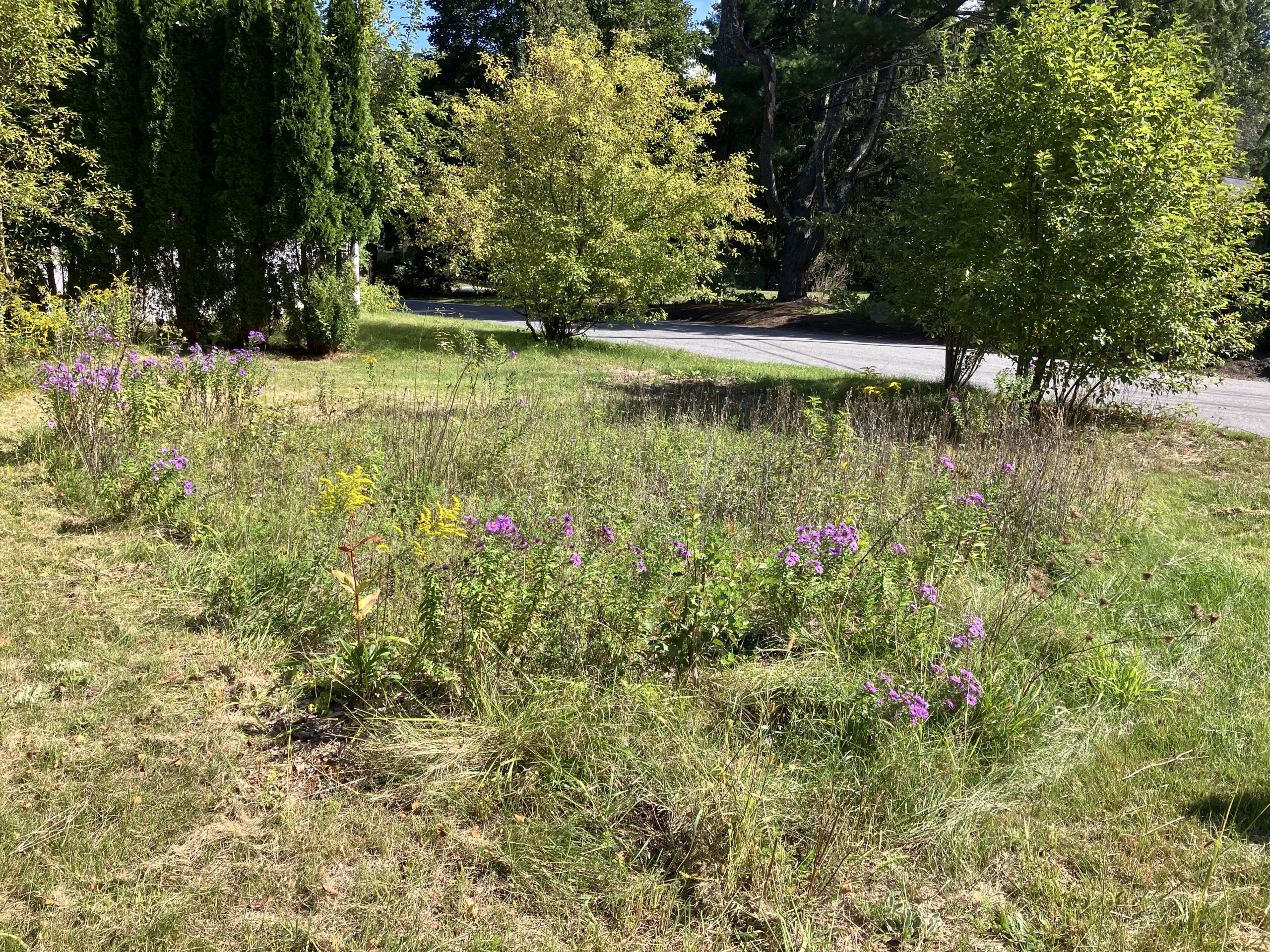
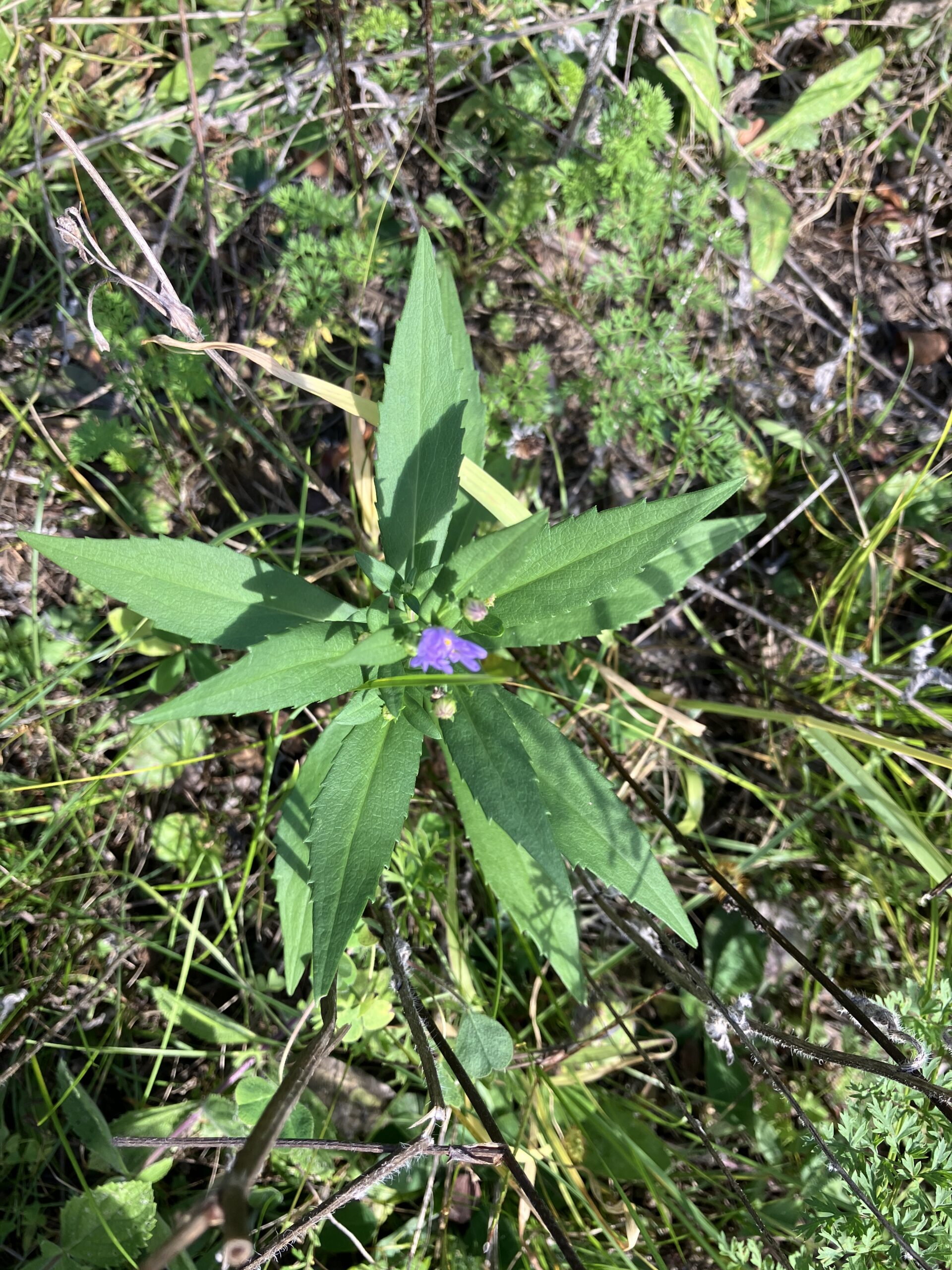
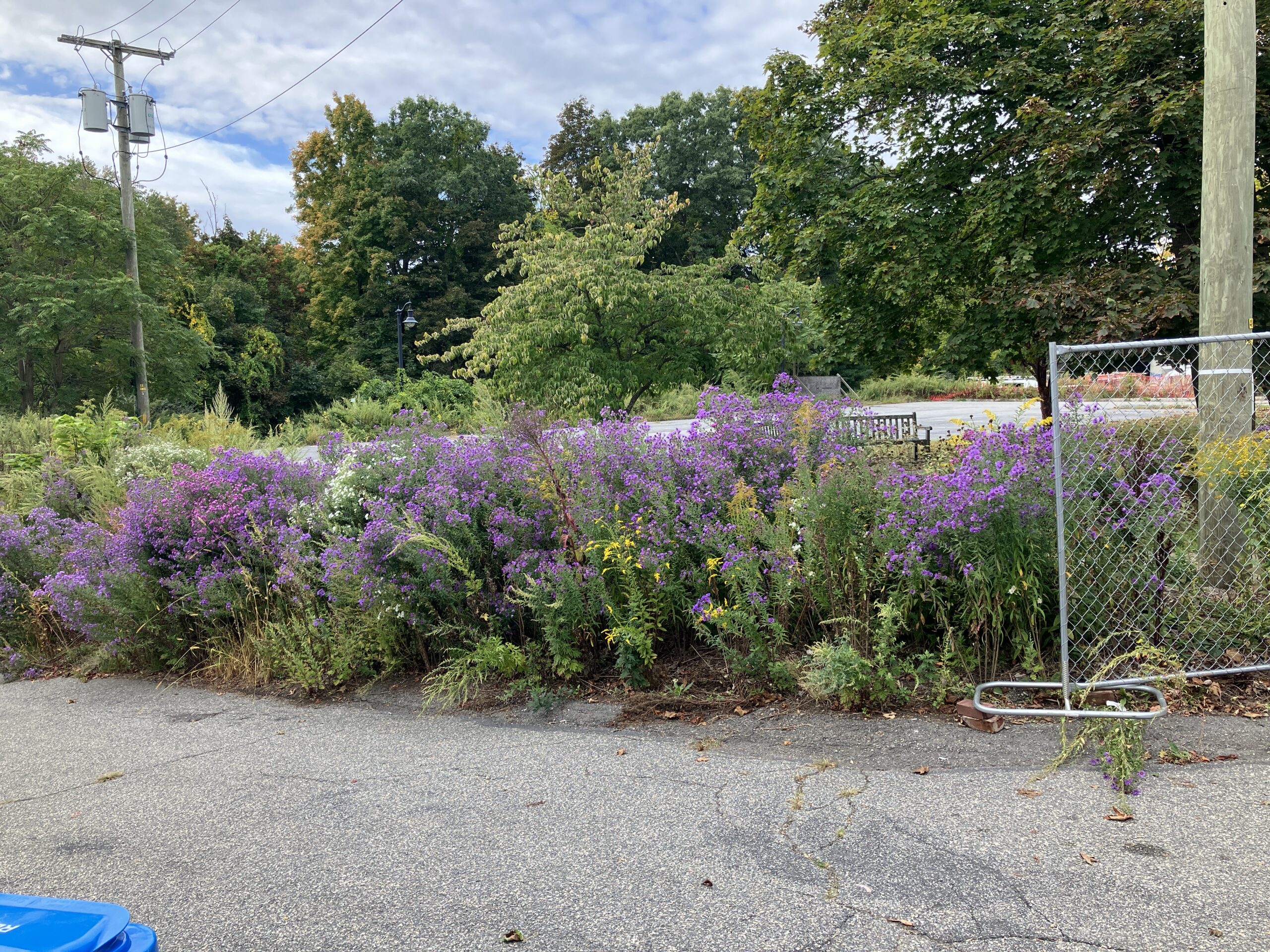
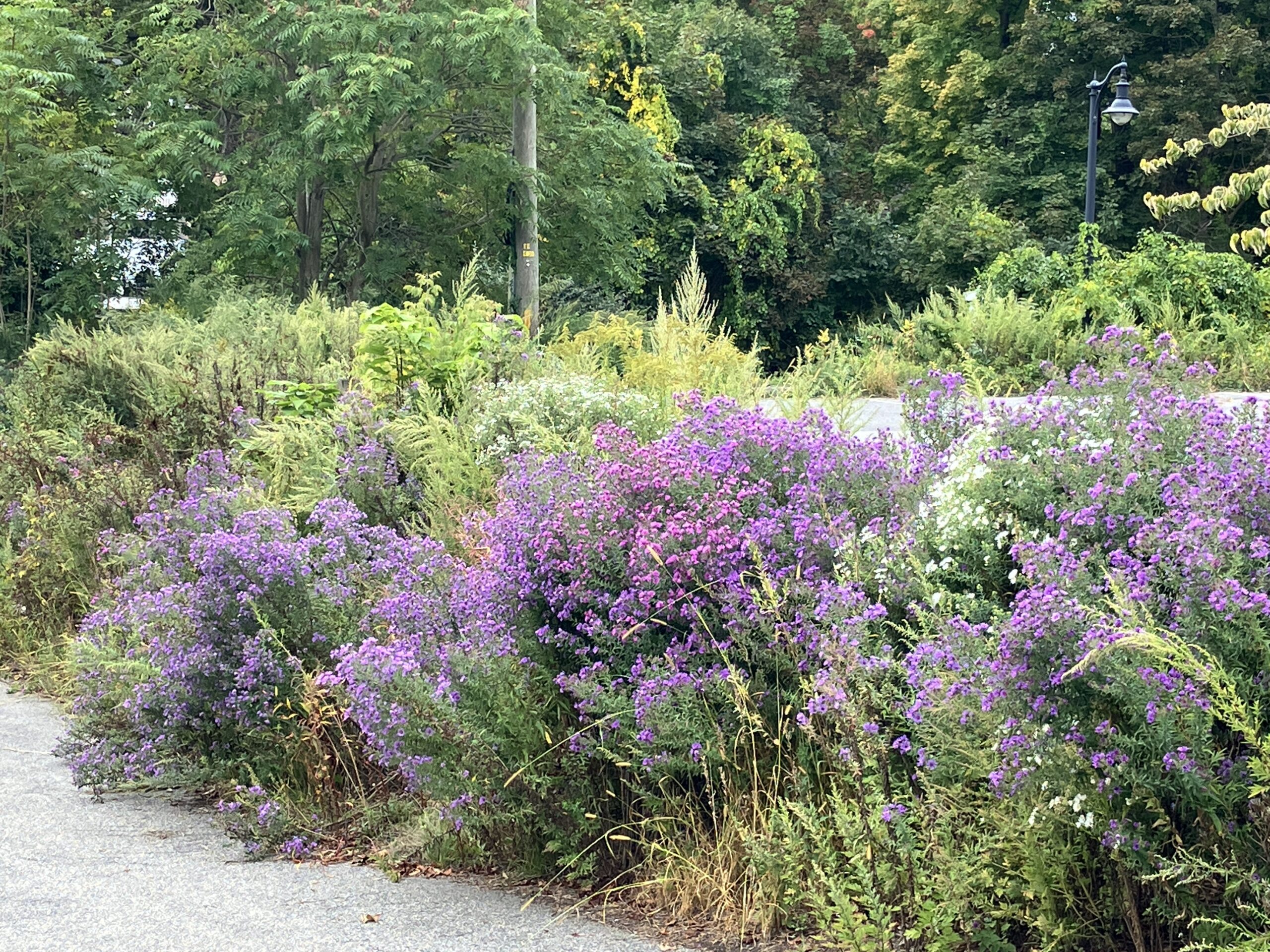
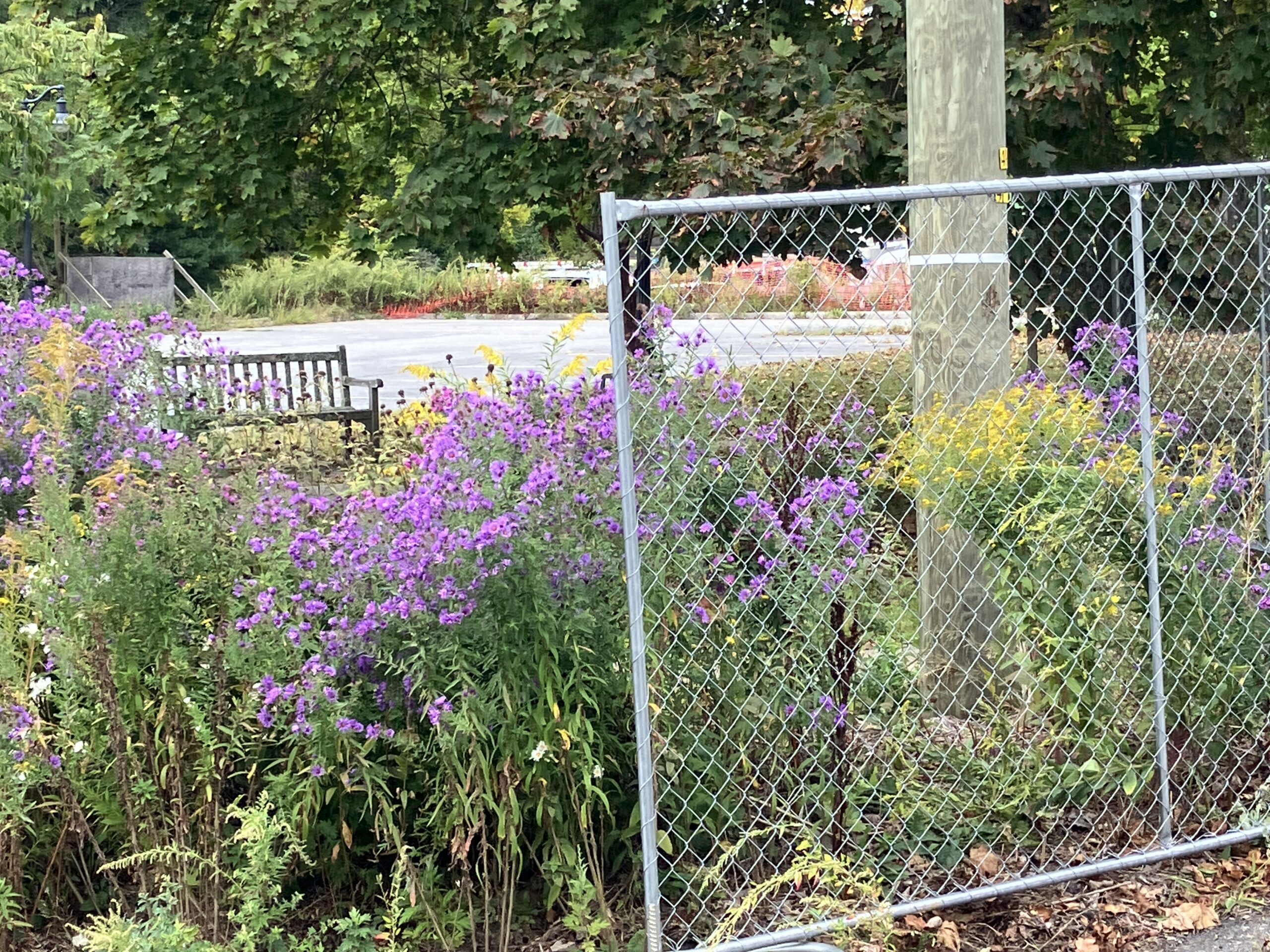
A developer bought a property down the street that has been derelict for the eight years I’ve lived on River Street. With the pressure to renovate four units and get them occupied in less than six months, he accepted my offer to help him with the hillside by giving me the entire hillside. This was more land than I had planned to take on, and I had done no training in how to manage erosion, but he had clear-cut the entire area in March 2024 and was letting me do anything I wanted. I weeded mugwort throughout summer 2024, seeded in fall, and in May 2025, I believe I’ve seen 13 of the 21 species I seeded emerge. Fall 2025, the site looked great, but it was going to be developed July 2026. I distributed hundreds of native plants in the late fall, but I continued to find new desirable seedlings spring 2026, which I’ve dug out and relocated.
March 2024 to Summer 2026
Seeded with oats in early spring 2024 and then again in late summer; hand weeded and smothered with cardboard and straw. Seeded a few areas with Chamaecrista fasciculata, Schizachyrium scoparium, and Bouteloua curtipendula in late spring, and seeded entire area in November 24, 2024. In fall 2025 the site was dominated by Oenothera biennis, which I didn’t seed. The New England asters were heavily eaten by a groundhog, but there are so many we had a nice fall show. There were plenty of exciting young perennials: penstemon, monarda, and Tephrosia virginiana showed up throughout the site. The Antennaria neglecta I separated from one Native Plant Trust purchase is spreading rapidly everywhere I planted it. (Some seeds also emerged.) I seeded heavily with Schizachyrium scoparium and I found two plants hidden beneath a huge Oenothera biennis. I purchased two more from Blue Stem Natives fall 2025 (replaced to Pond Street location). A few Ionactis linariifolia and one Pycnanthemum virginianum (from 4000 seeds).
Click on image to view larger


Pond View Drive
Site #3
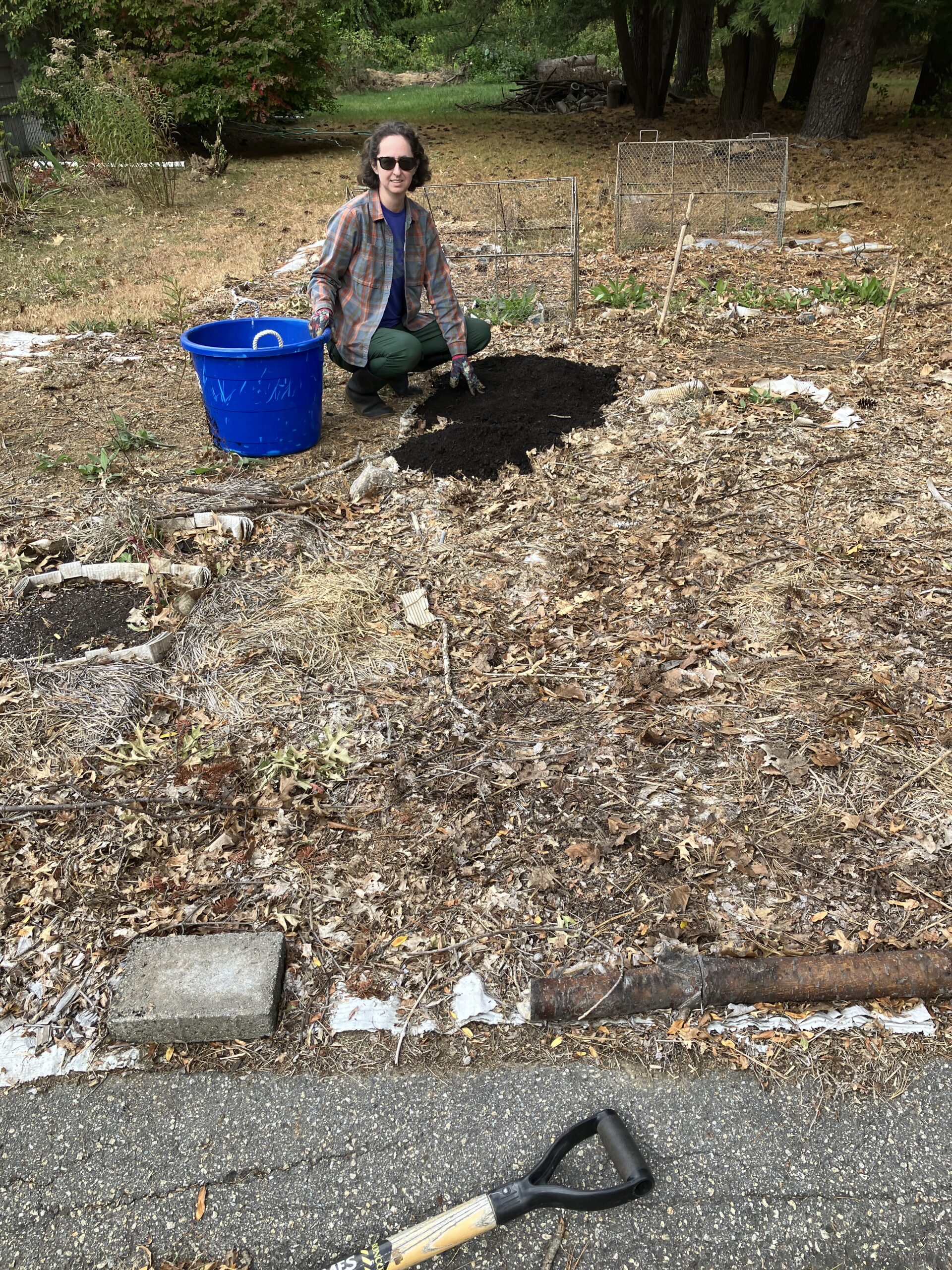
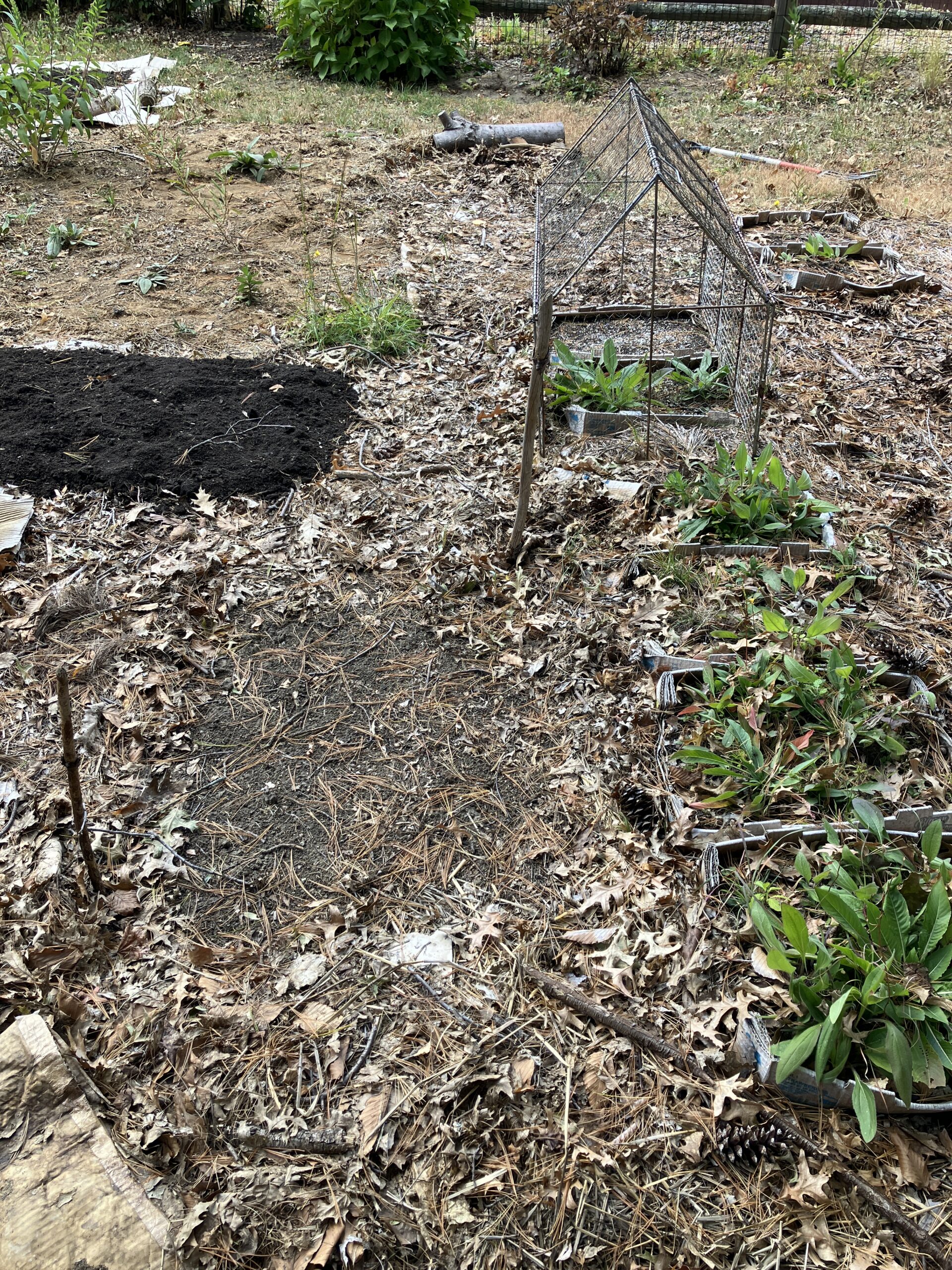
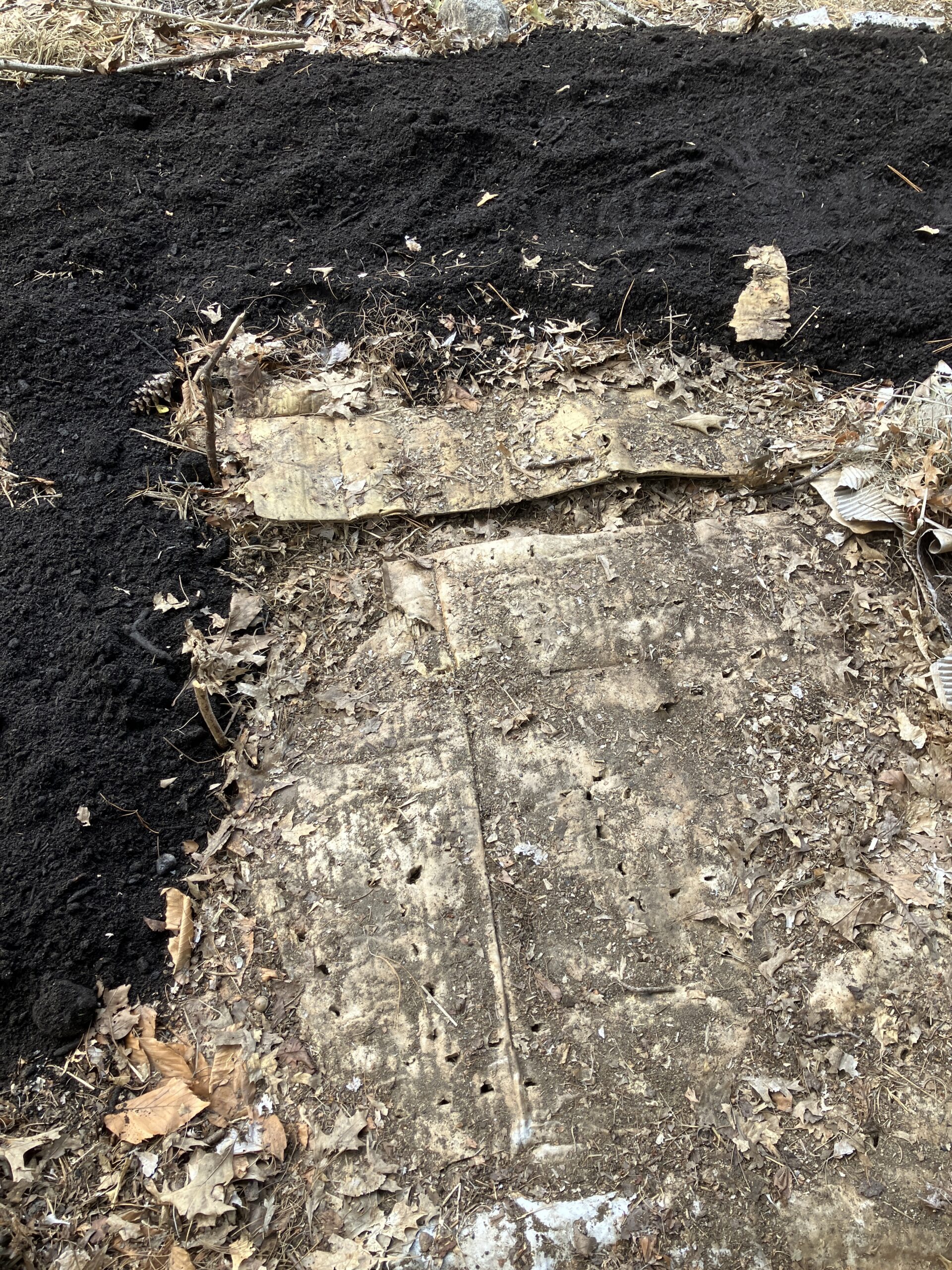
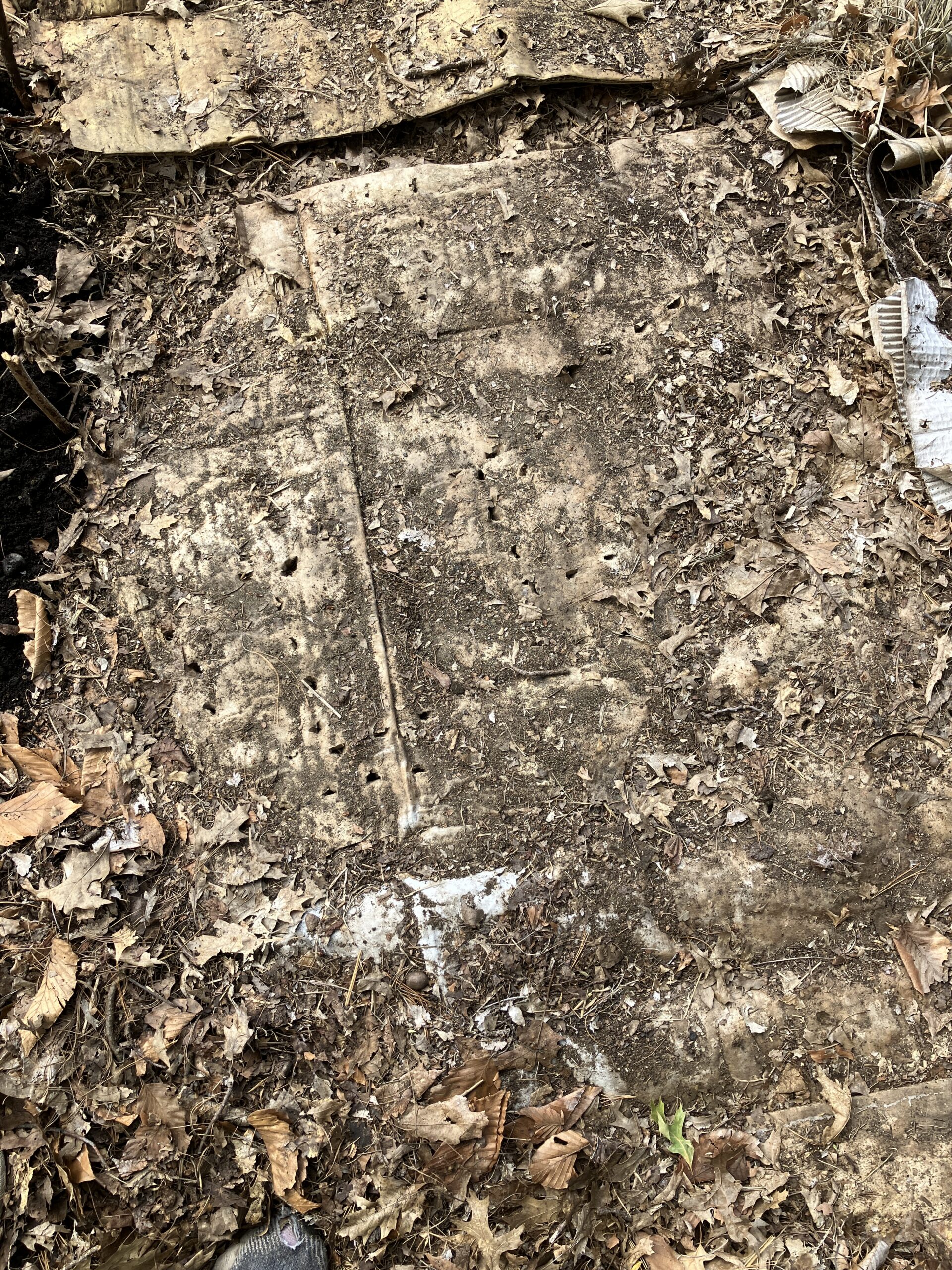
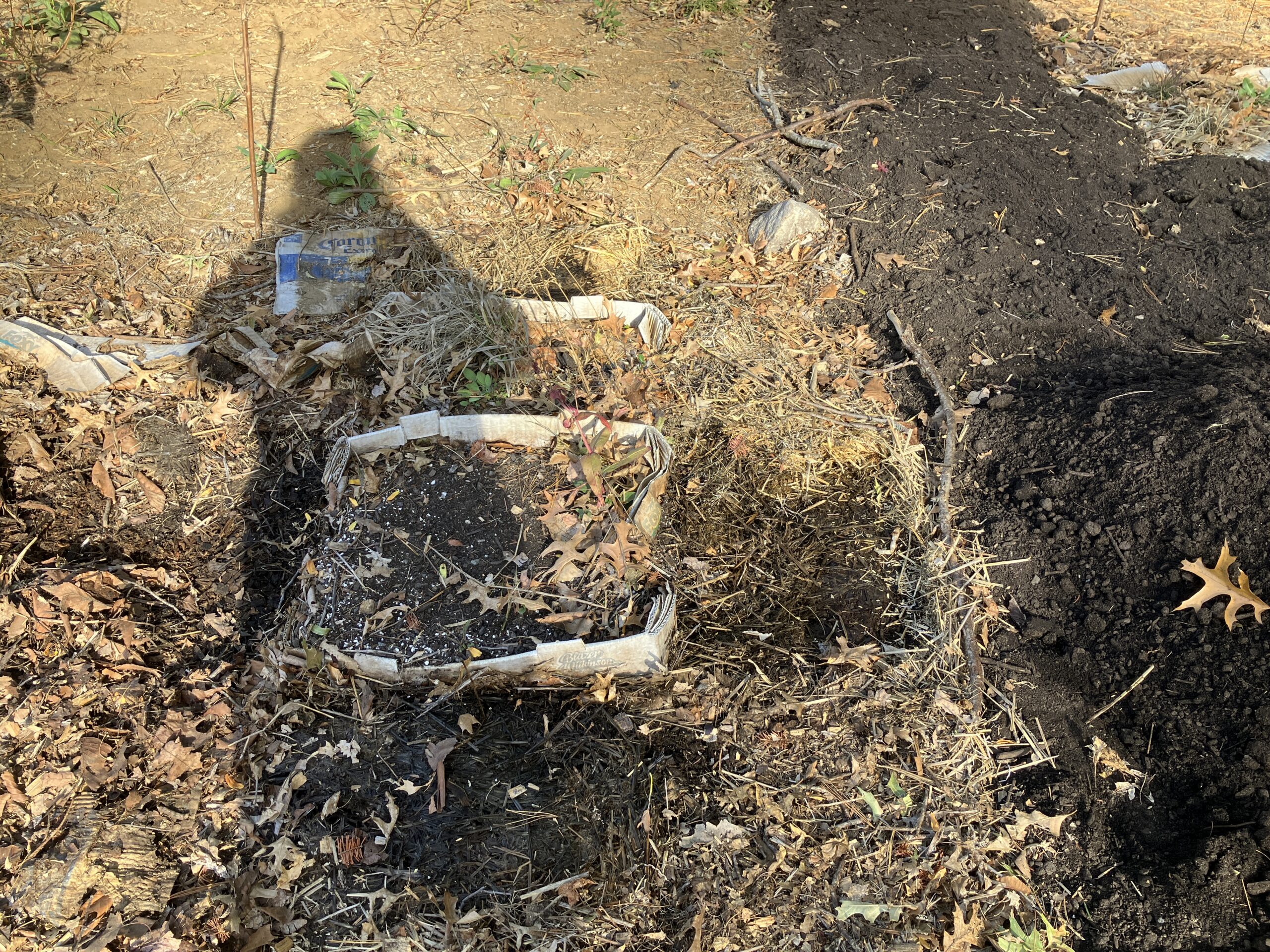
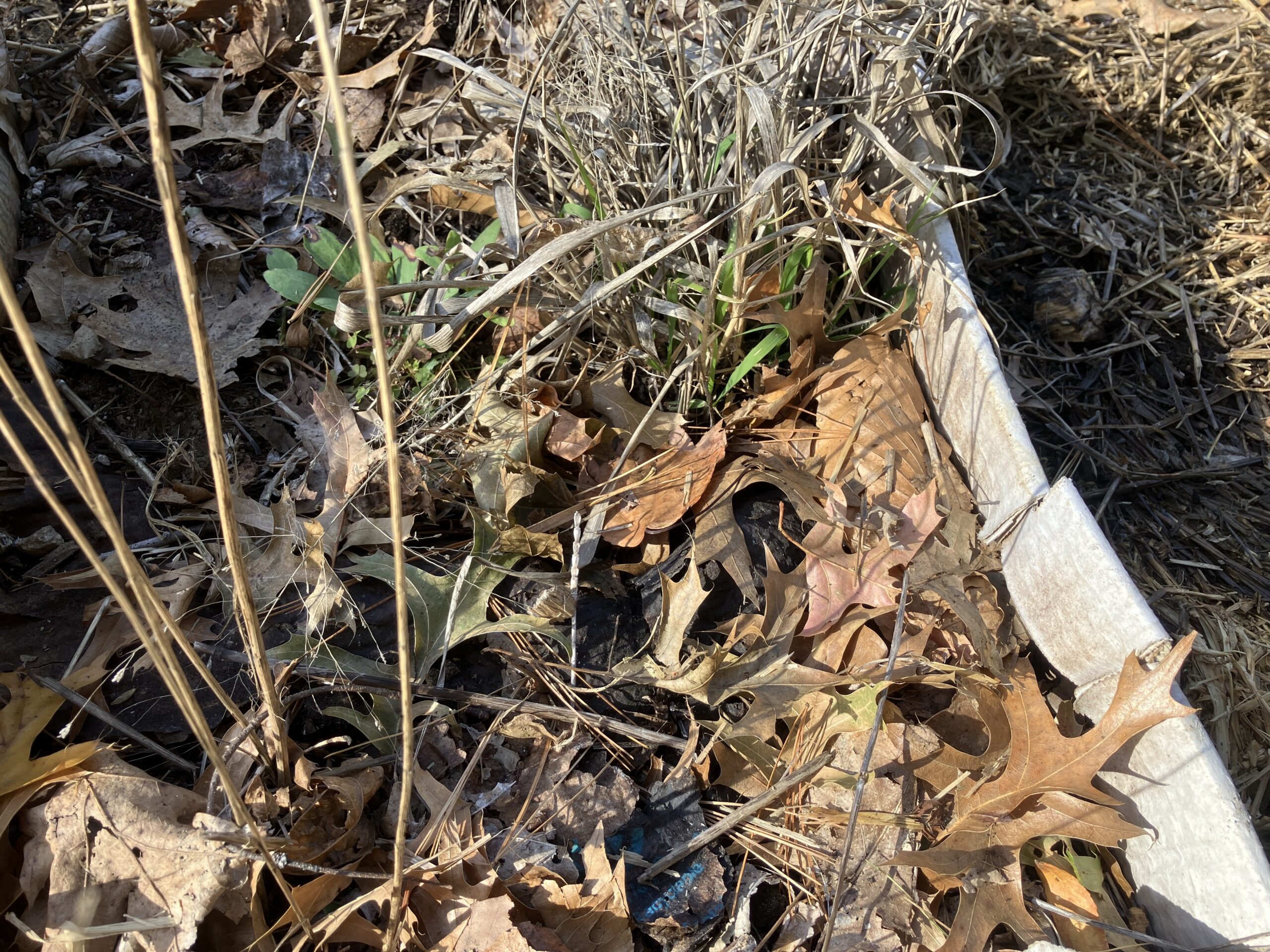
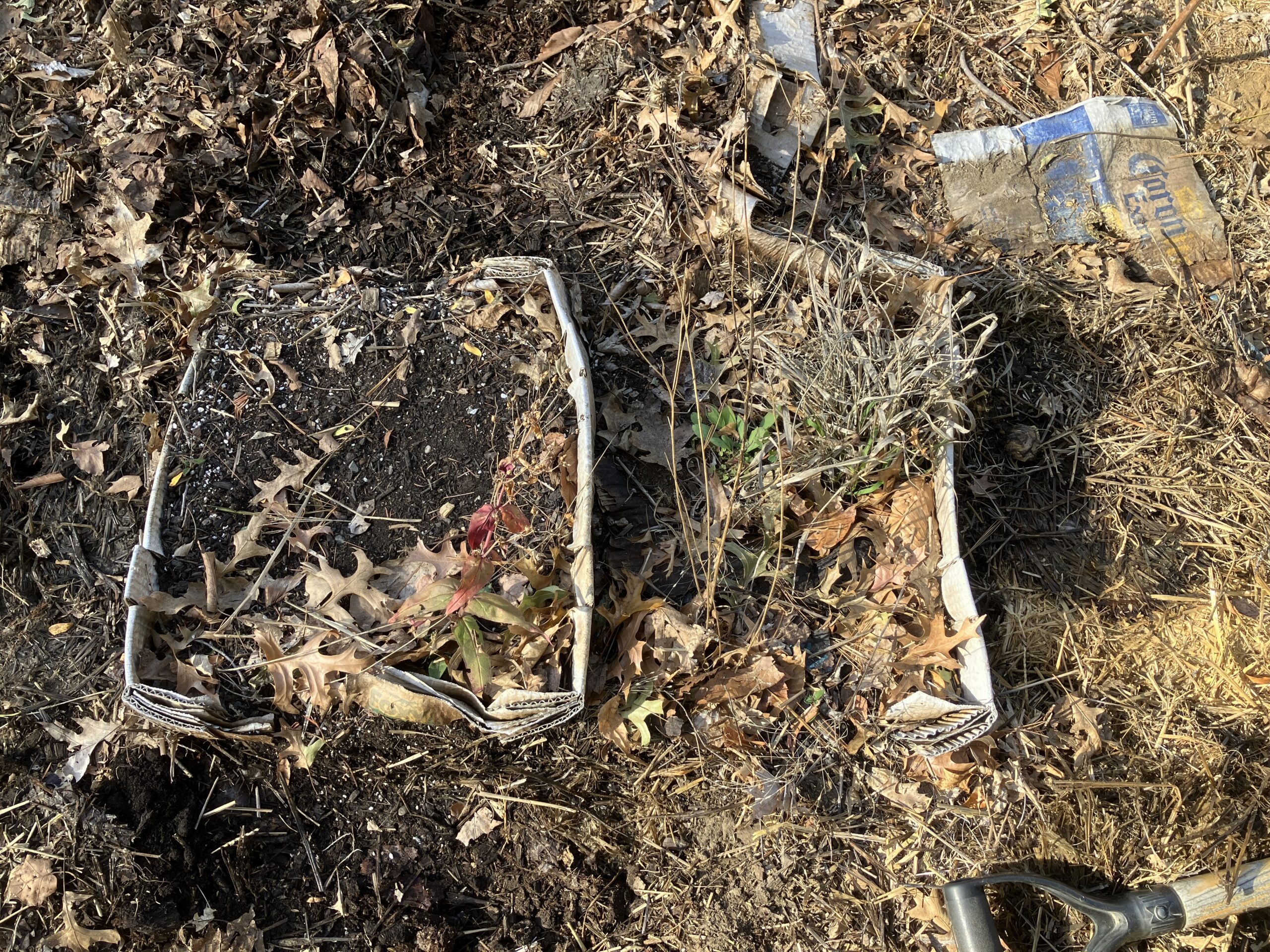
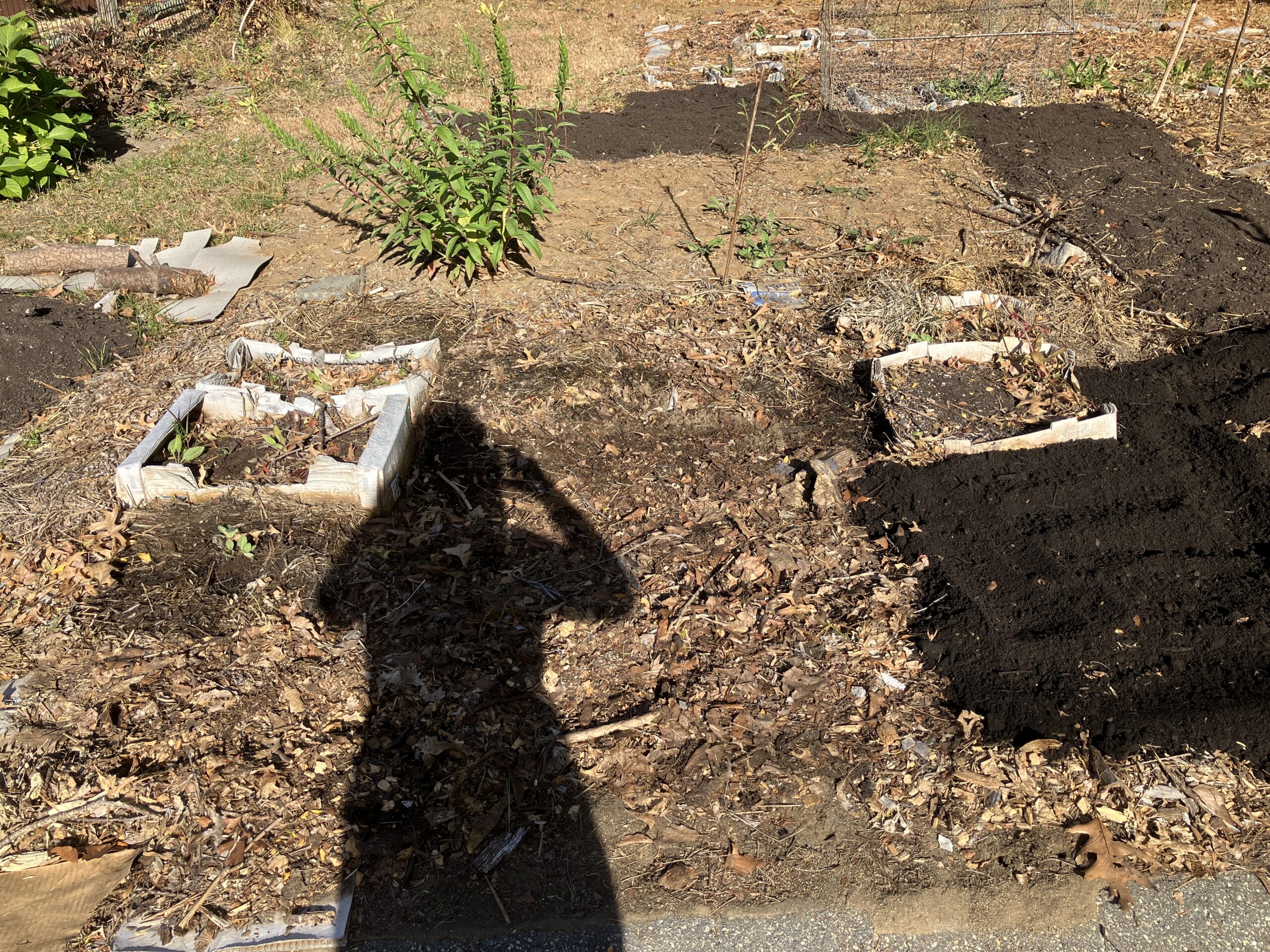
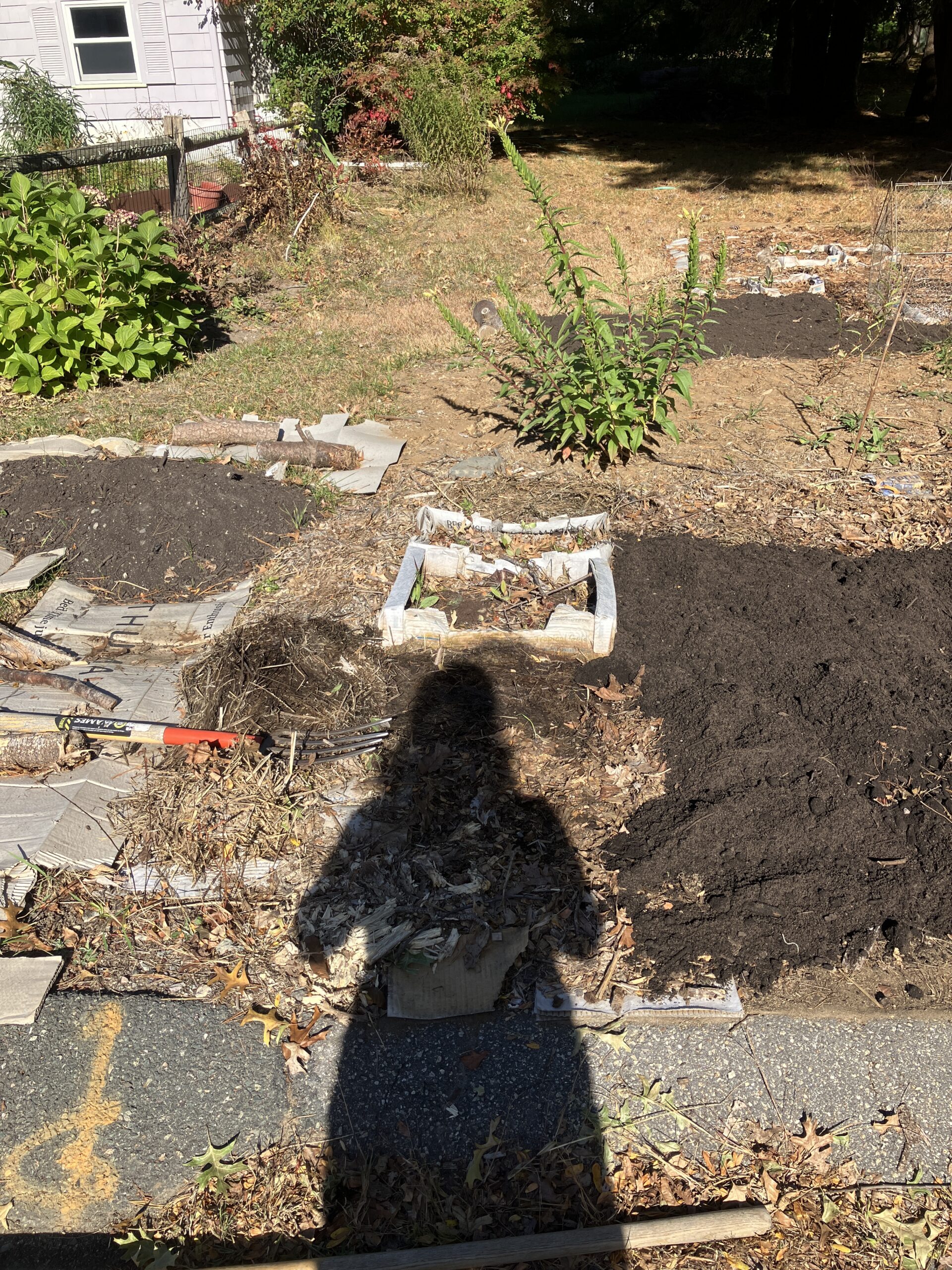
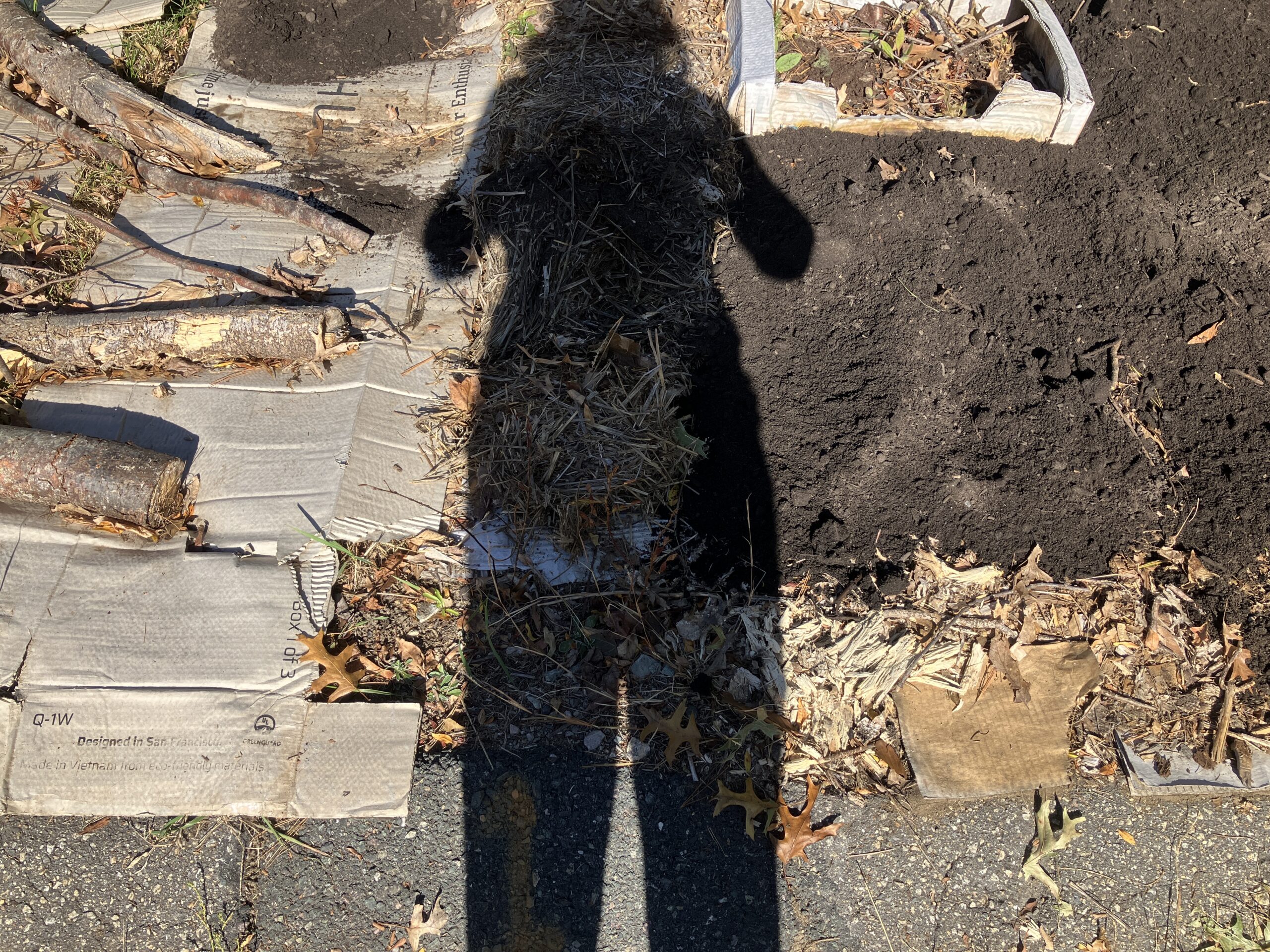
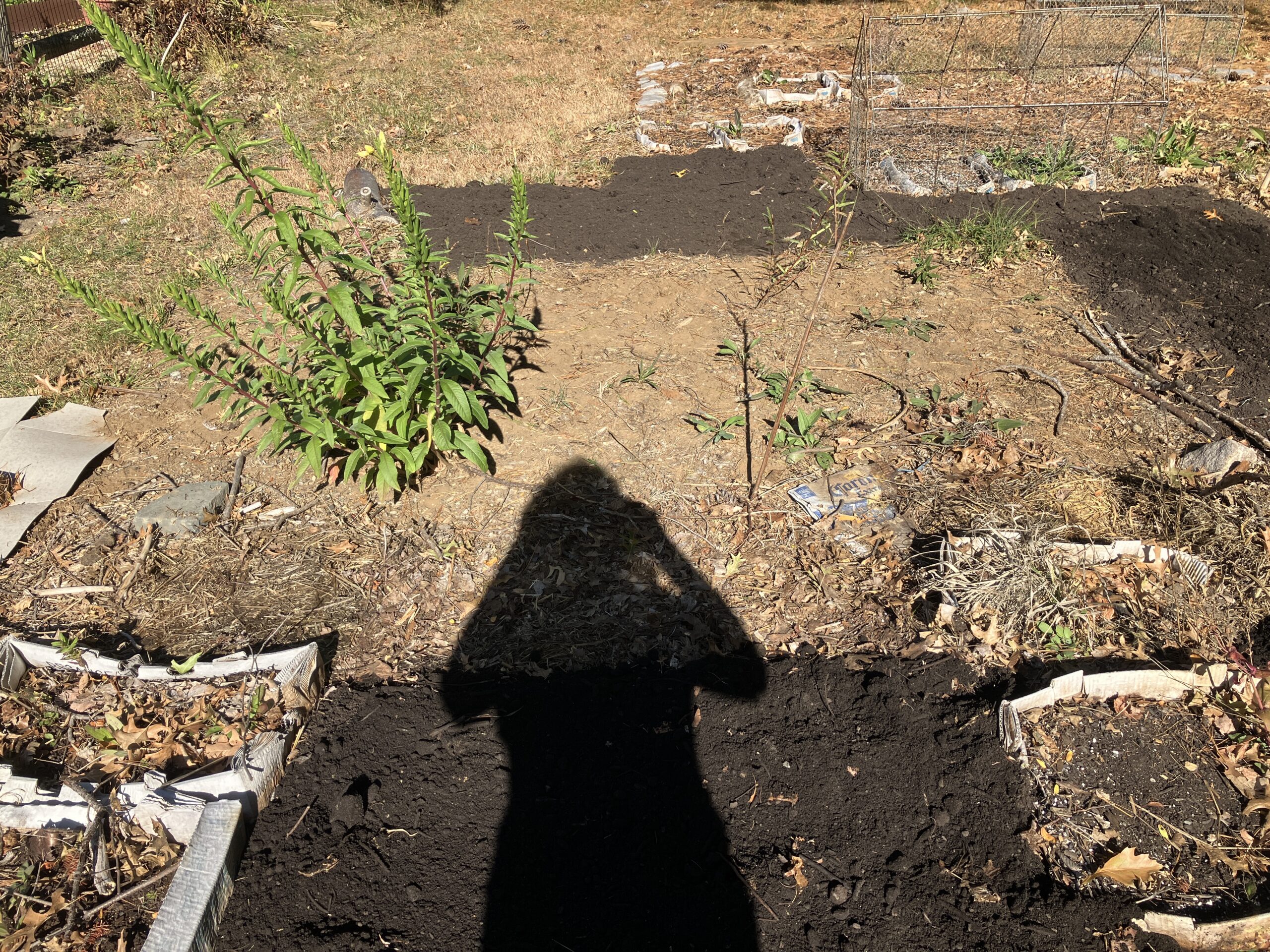
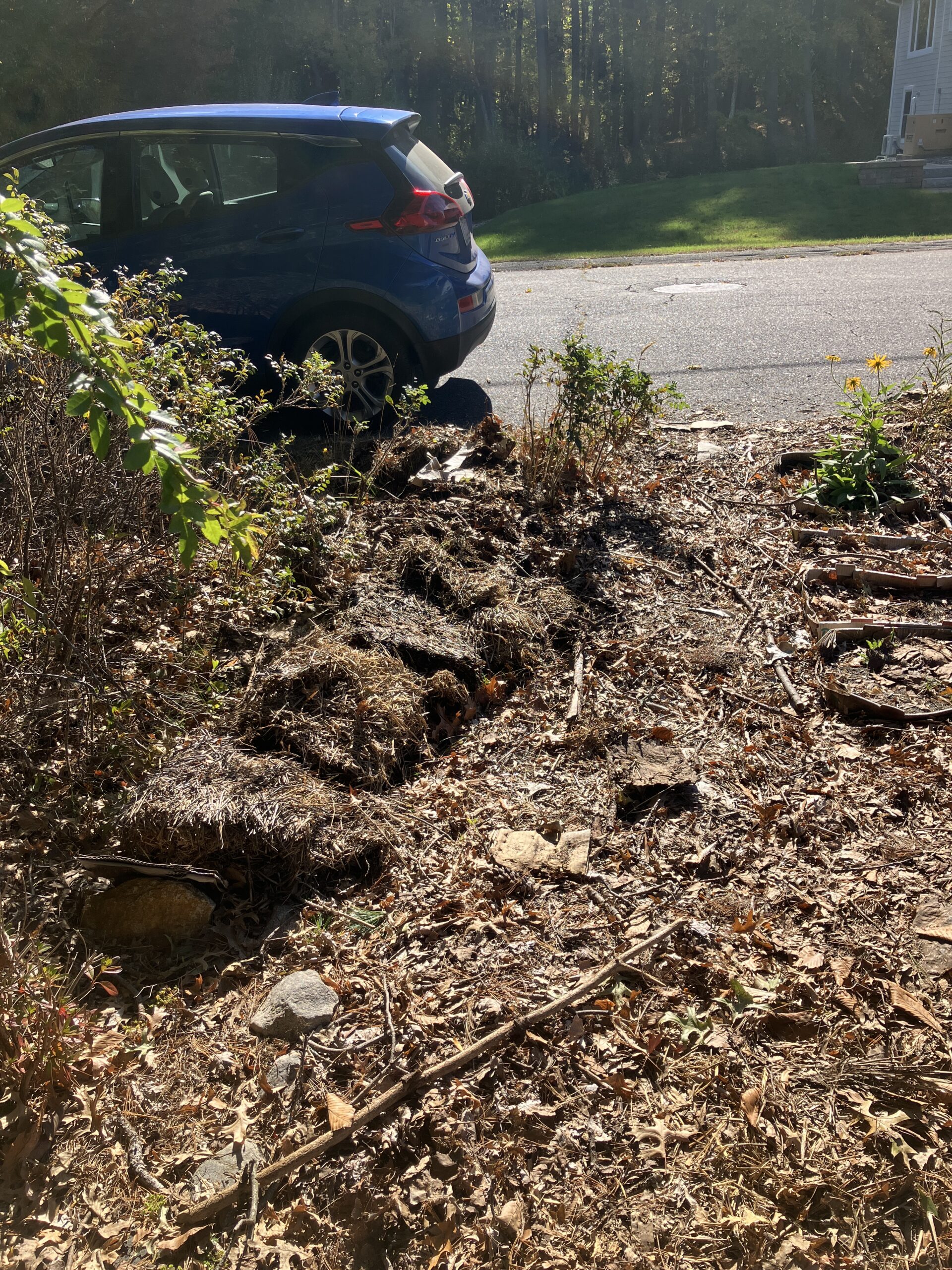
A neighbor volunteered some land for me to experiment with smothering. We seeded some flat cardboard boxes in fall 2025 and laid down cardboard with leaves and branches over the winter. They also put cardboard, wood chips, and a thin layer of dirt in one area. Spring 2026, I was happy with what sprouted but nothing thrived in the boxes. We watered regularly. Likely the roots failed to pierce the cardboard below. I eventually tried to transplant some of the Lupinus perennis, which had sprouted but languished for several months. The good news is that the smothering seems to have worked relatively well.
March 2025 to Summer 2026
I seeded the area on Pond View Road in small cardboard boxes, which overwintered on the site. During the late fall, we covered the area with cardboard, leaves, and branches. The seeds in the boxes sprouted in early spring, particularly those in more shaded areas, but they failed to thrive.
I used sand in one box with the lupins and coir in another box. Both boxes had good germination but then the seedlings languished and failed to grow. I transplanted all but one. That one is still alive; the transplanted ones died.
Click on image to view larger